G&R Insulating & ScaffoldingG&R Insulating & ScaffoldingG&R Insulating & ScaffoldingG&R Insulating & Scaffolding
  • Home
  • About
    • About G&R Insulating
    • Meet Our Team
  • Services
    • Mechanical Pipe Insulation
    • Oilfield Buildings
      • Polyurethane Panel Buildings
      • Self-Framer Buildings
    • Utilidors
    • Scaffolding
    • Vessels & Tanks
    • Reusable Insulation Covers
    • Glycol Heat Tracing System Installations
    • BBQ Shack Rental
    • Game Locker
  • Gallery
  • Safety
  • FAQ
  • Employment Opportunities
  • Contact Us

How Glycol Heat Tracing Prevents Pipeline Freeze-Ups

    Home General How Glycol Heat Tracing Prevents Pipeline Freeze-Ups
    Previous
    Glycol Heat Tracing

    How Glycol Heat Tracing Prevents Pipeline Freeze-Ups

    By devadmin | General | Comments are Closed | 3 November, 2026 | 0

    Glycol heat tracing protects industrial piping from freezing by circulating heated fluid through tubing installed alongside the pipe beneath insulation. This approach adds heat where prolonged cold can pull temperatures below safe operating levels. At G&R Insulating & Scaffolding, our team installs glycol tracing systems throughout Alberta and British Columbia for freeze protection and temperature maintenance.

    Why Pipeline Freeze Protection Needs Active Heat

    Insulation slows heat loss, but it cannot supply heat indefinitely during prolonged extreme cold. As ambient temperatures fall, exposed piping can lose enough heat for fluids inside the line to approach freezing. Heat tracing provides additional heat to offset that loss and keep the protected line within its required operating range.

    For industrial pipeline freeze protection, the tracing system must work with the insulation rather than replace it. The National Insulation Association identifies heat tracing as a common approach for piping that requires freeze protection or process temperature maintenance. Proper insulation reduces the heat load that the tracing system must replace.

    How Glycol Heat Tracing Transfers Heat

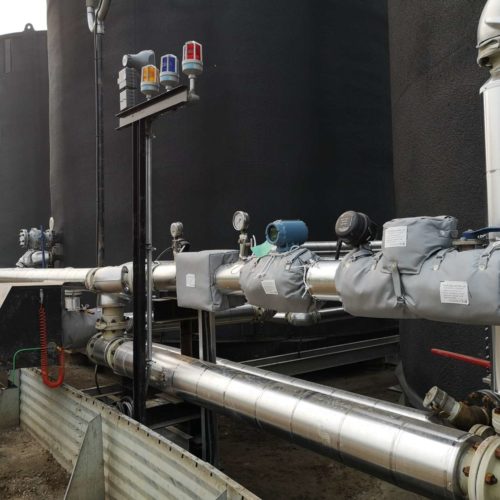
    Glycol heat tracing uses a closed-loop circulation system with stainless-steel tubing installed beneath pipe insulation. Heated glycol travels through the tubing and transfers heat toward the piping. At G&R Insulating & Scaffolding, our team installs these systems for cold-weather industrial applications.

    Heat Reaches Vulnerable Sections

    Tracing tubing follows the protected pipe so heat can reach areas exposed to low ambient temperatures. Insulation then helps retain that heat around the pipe instead of allowing it to escape rapidly.

    The two components serve different purposes: tracing supplies heat, while insulation slows heat loss. Using both helps create a thermal protection system suited to prolonged cold-weather exposure.

    Protection Helps Avoid Frozen Lines

    A frozen pipeline can restrict flow, damage components, interrupt production, and create unplanned downtime. Long exposed runs and piping located in severe cold deserve particular attention because they can lose heat rapidly.

    Our team installs glycol tracing systems for facilities facing prolonged cold conditions. Proper installation supports the intended freeze-protection strategy and helps maintain critical piping during winter operations.

    Temperature Maintenance Supports Process Stability

    Freeze protection is not the only application. Some process lines need to maintain a minimum temperature to support consistent operation. Glycol tracing can provide additional heat when insulation alone cannot maintain the required condition.

    ASHRAE recognizes heat-transfer fluids as one method of providing protection in systems exposed to freezing conditions. The appropriate setup depends on the operating requirements established for each application.

    What Makes a Glycol Tracing System Effective?

    Installation quality matters, but performance begins with correct project requirements. Heat loss, insulation condition, tubing arrangement, glycol properties, operating temperatures, and the lowest expected ambient temperature all affect the result.

    G&R Insulating & Scaffolding focuses on installation rather than system design. Our FAQ states that we install glycol tracing systems but do not design them. Clear engineering and project specifications should establish the required system before installation begins. For critical freeze protection, the installed system must match those requirements.

    Insulation Controls the Heat Load

    Heat tracing works more effectively when the pipe assembly limits heat loss. Damaged, incomplete, wet, or poorly fitted insulation can create cold areas and increase the heat the tracing must replace.

    The National Insulation Association notes that heat tracing may require insulation arrangements that accommodate the tracing system.

    Tubing Placement Supports Heat Transfer

    Tracing tubing needs suitable positioning along the pipe to transfer heat consistently. Poor contact, gaps, or irregular placement can create localized areas that cool faster than surrounding sections.

    Our team installs stainless-steel tubing as part of the glycol tracing system. Consistent workmanship helps support the heat-transfer path established by the project requirements.

    Cold Weather Shapes Protection Requirements

    Alberta and British Columbia can experience extended periods of severe cold. Minimum ambient temperature, pipe size, fluid temperature, exposure, insulation thickness, and line length all influence required heat input.

    Industry guidance recommends accounting for environmental conditions and heat loss when developing freeze-protection systems.

    Glycol Concentration Affects Protection

    Glycol concentration influences freezing behavior, fluid properties, and system performance. ASHRAE guidance recommends selecting concentration based on required protection and expected temperatures while also considering corrosion control.

    Follow specified fluid requirements and manufacturer guidance rather than treating one glycol mixture as suitable for every application.

    Prepare Critical Piping Before Winter

    Glycol tracing provides active protection by transferring heat through tubing installed beneath insulation. When the tracing arrangement, insulation, fluid requirements, and operating conditions work together, the system can help maintain temperature and reduce the risk of pipeline freeze-ups.

    At G&R Insulating & Scaffolding, our team installs glycol tracing systems for industrial applications throughout Alberta and British Columbia. Planning ahead allows site requirements and insulation conditions to be addressed before severe weather creates an urgent problem.

    Plan Glycol Heat Tracing With G&R Insulating & Scaffolding

    Contact G&R Insulating & Scaffolding to discuss glycol tracing installation for your industrial piping and cold-weather freeze-protection needs.

    Glycol Heat Tracing

    devadmin

    More posts by devadmin

    Related Post

    • scaffold systems

      How Reusable Insulation Covers Help Reduce Heat Loss

      By devadmin | Comments are Closed

      Industrial equipment exposed to cold temperatures can lose valuable heat without proper protection. Valves, flanges, tracer lines, and other components often become weak points where heat escapes, leading to higher energy consumption and inconsistent operatingRead more

    • What Are Utilidor Buildings and How Do They Work?

      By devadmin | Comments are Closed

      Industrial facilities depend on reliable utility infrastructure to keep operations running efficiently. Whether transporting water, steam, process fluids, or other essential services, protecting piping systems from heat loss and environmental conditions is critical. This isRead more

    • BBQ Shack Rental

      Top Benefits of Renting a BBQ Shack for Family Celebrations

      By devadmin | Comments are Closed

      Family celebrations are some of life’s most meaningful moments. Whether you are planning a birthday party, family reunion, anniversary, graduation gathering, or community get-together, creating a comfortable and enjoyable atmosphere is essential. One of theRead more

    • Site engineer reviewing laptop

      Underground Utility Solutions With Modern Utilidor Construction

      By devadmin | Comments are Closed

      Underground Utility Solutions With Modern Utilidor Construction Industrial operations depend on reliable utility infrastructure to maintain efficient performance in demanding environments. Oilfield facilities, industrial plants, and remote project sites all require protected systems that supportRead more

    • Underground parking lot utility pipes

      How Glycol Heat Tracing System Installation Prevents Pipeline Freeze-Ups

      By devadmin | Comments are Closed

      Winter does not give industrial facilities much warning. One overnight temperature drop can freeze an exposed pipeline, stall a process, and turn a routine workday into an emergency shutdown. For facilities running continuous operations, thatRead more

    Previous

    Recent Posts

    • Glycol Heat Tracing
      3 November, 2026
      Comments Off on How Glycol Heat Tracing Prevents Pipeline Freeze-Ups

      How Glycol Heat Tracing Prevents Pipeline Freeze-Ups

    • Underground parking lot utility pipes
      3 November, 2026
      Comments Off on How Polyurethane Panels and Metal Jacketing Improve Industrial Vessel Insulation

      How Polyurethane Panels and Metal Jacketing Improve Industrial Vessel Insulation

    • scaffold systems
      13 October, 2026
      Comments Off on How Reusable Insulation Covers Help Reduce Heat Loss

      How Reusable Insulation Covers Help Reduce Heat Loss

    • Glycol Heat Tracing
      14 September, 2026
      Comments Off on How to Maintain a Glycol Heat Tracing System

      How to Maintain a Glycol Heat Tracing System

    • Tank Insulation
      8 September, 2026
      Comments Off on The Benefits of Proper Vessel and Tank Insulation for Temperature Control

      The Benefits of Proper Vessel and Tank Insulation for Temperature Control

    Latest Projects

    • Mechanical Piping Insulation
    • Top Mechanical Pipe Insulation Contractors
    • Scaffolding project
    • Removable Insulation Blankets
    • Oilfield Buildings

    Quick Links

    • Home
    • About Us
    • Services
    • Safety
    • Gallery
    • Contact Us
    • Sitemap
    • Blog

    Specializing In

    • Mechanical Pipe Insulation
    • Oilfield Buildings
    • Utilidors
    • Scaffolding
    • Vessels & Tanks
    • Reusable Insulation Covers
    • Glycol Heat Tracing System Installations

    About Us

    G&R Insulating and Scaffolding was established in April 2000 and understands the importance of providing quality service and products by ensuring that our staff is well trained and capable of managing jobs in a safe and efficient manner. Quality Control is of the utmost importance to G&R Insulating and Scaffolding. Quality work, done on time, by a team you can trust.

    Contact Us

    Address:
    9318-81st Ave,
    Clairmont, AB,
    T8X 0M2

    Phone:
    (587) 259-0800

    Fax:
    1-866-854-4638

    Email:
    info@grinsulating.com

    • Mechanical Pipe Insulation
    • Oilfield Buildings
    • Utilidors
    • Scaffolding
    • Vessels & Tanks
    • Reusable Insulation Covers
    • Glycol Heat Tracing System Installations
    © Copyright G&R Insulating Ltd. - All Rights Reserved | Website by Webacom
    • Home
    • About
      • About G&R Insulating
      • Meet Our Team
    • Services
      • Mechanical Pipe Insulation
      • Oilfield Buildings
        • Polyurethane Panel Buildings
        • Self-Framer Buildings
      • Utilidors
      • Scaffolding
      • Vessels & Tanks
      • Reusable Insulation Covers
      • Glycol Heat Tracing System Installations
      • BBQ Shack Rental
      • Game Locker
    • Gallery
    • Safety
    • FAQ
    • Employment Opportunities
    • Contact Us
    G&R Insulating & Scaffolding