Industrial vessel insulation helps control heat transfer between stored materials and the surrounding environment. For oil and gas facilities, that control can support process stability, reduce energy demand, limit freezing risks, and protect equipment from harsh weather. At G&R Insulating & Scaffolding, our team installs vessel and tank insulation across Alberta, British Columbia, and Western Canada using polyurethane panels and several insulation materials.
Why Vessel Insulation Matters for Oil and Gas Operations
Temperature control affects process stability and energy use. Heat can escape from hot tanks and vessels, while severe cold can lower temperatures inside equipment that needs protection from freezing. Insulation creates a thermal barrier that reduces unwanted heat flow and helps maintain operating conditions.
For oilfield vessel heat conservation, the insulation system needs to match the vessel, operating temperatures, weather exposure, maintenance requirements, and project specifications. Proper tank and vessel insulation can reduce heat transfer and the energy required to maintain fluid temperatures.
How Polyurethane Panels Improve Vessel Performance
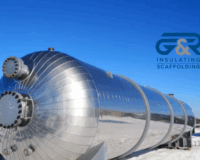
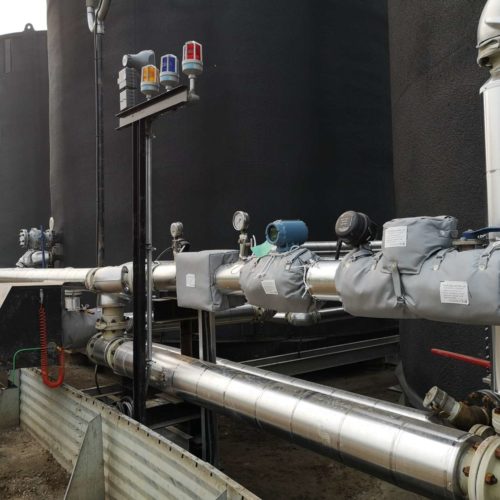
For industrial vessel insulation, polyurethane panels offer a practical approach for insulating curved tanks and vessels. At G&R Insulating & Scaffolding, our team uses panels with an R-12 value for vessel and tank applications. One side carries a protective skin, while the polyurethane on the opposite side is scored so the panel can flex around the tank. Stainless steel strapping secures the panels in place.
Better Fit Around Curved Tank Surfaces
Curved vessels create different installation challenges from flat walls. Scored polyurethane panels can flex around tank geometry, allowing our team to create a closer-fitting insulation layer. A proper fit helps reduce thermal weak points and provides more consistent coverage.
Strong Thermal Resistance for Heat Conservation
Polyurethane provides thermal resistance that slows heat transfer. This matters when a process requires a vessel to maintain a specific temperature while surrounding conditions remain much colder or hotter.
For oilfield vessel heat conservation, reducing unwanted heat loss can lower the energy needed to maintain process temperatures. Actual performance depends on material properties, thickness, installation quality, operating temperature, and environmental conditions.
Support Against Freezing and Solar Heat Gain
Northern Alberta and British Columbia can experience prolonged severe cold. Proper insulation helps limit temperature changes caused by low ambient temperatures and can reduce the effect of direct solar heating on exposed tanks.
At G&R Insulating & Scaffolding, our team identifies freezing protection and reduced solar radiation effects as benefits of properly insulating storage tanks and vessels.
Why Metal Jacketing Adds Protection to Insulation
For industrial vessel insulation, the insulation layer alone does not provide a complete exterior system for every industrial application. Exposed insulation can face rain, snow, wind, physical contact, and maintenance activity. Metal jacketing adds a protective outer layer that helps preserve the installed insulation.
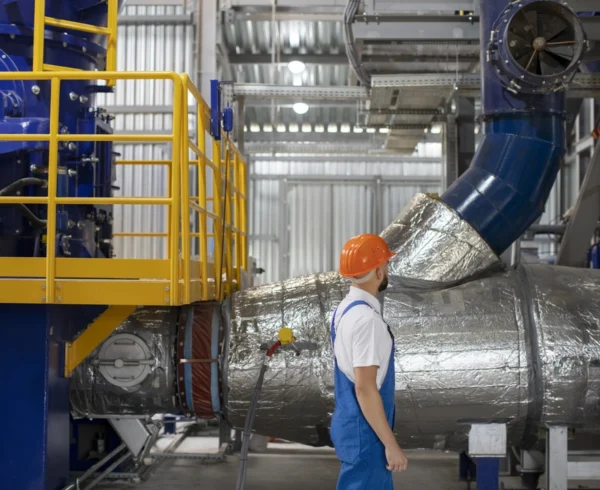
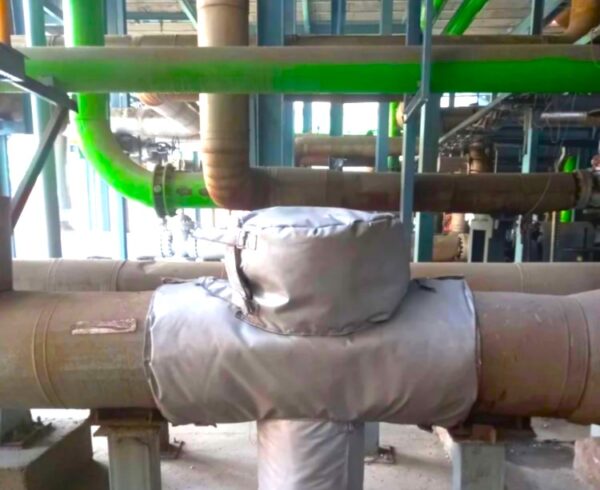
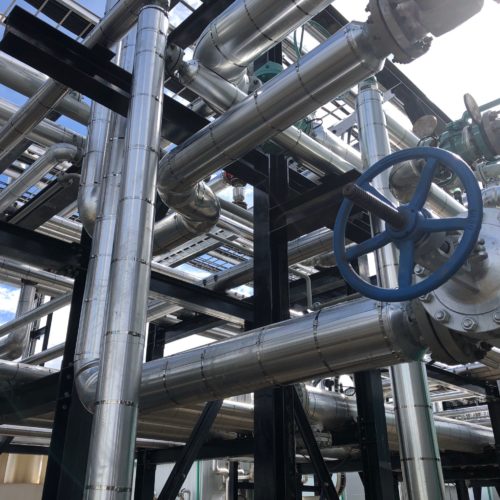
At G&R Insulating & Scaffolding, our team installs insulation with metal jacketing secured using stainless steel strapping. Available options include galvalume, galvanized, pre-painted, and aluminum materials for polyurethane panel applications, along with smooth, corrugated, and stucco-embossed finishes.
Shielding Insulation From Weather Exposure
Moisture can affect insulation performance and increase maintenance concerns. A properly selected and installed jacket helps shield the insulation from precipitation and environmental exposure.
For oil and gas facility insulation, exterior protection matters because tanks and vessels often remain exposed to changing weather throughout the year. National Insulation Association guidance recognizes weather protection as a key function of insulation finishes and jacketing.
Adding Mechanical Protection Around Vessels
Industrial maintenance involves equipment movement, tools, ladders, and other activities near tanks. The exterior jacket helps protect the underlying insulation from routine physical contact and damage.
National Insulation Association guidance specifically identifies mechanical protection as an important consideration and notes that metal jacketing can help protect insulation from physical abuse.
Supporting a Durable Exterior Finish
Metal jacketing gives an industrial vessel a defined exterior surface while helping hold and protect the insulation beneath it. Smooth, corrugated, and stucco-embossed finishes can suit different project requirements.
The choice should account for exposure, maintenance access, and facility specifications. Stainless steel strapping provides a secure fastening method around the vessel.
How Insulation Choices Affect Vessel Performance
No single insulation material fits every tank or vessel. At G&R Insulating & Scaffolding, our team works with mineral wool, fiberglass, Foamglas, calcium silicate, urethane, and polyurethane panel systems.
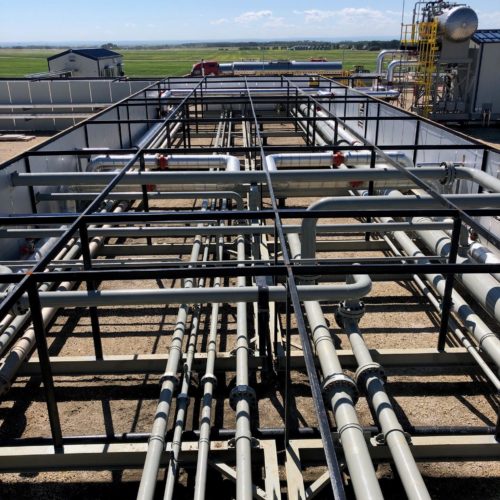
Industrial vessel insulation selection should account for operating temperature, environmental exposure, thermal performance, available space, moisture conditions, and project specifications. For oil storage tank insulation, these factors become especially important because tank contents and temperature requirements can vary between facilities.
What Should You Consider Before an Insulation Project?
Start with accurate information about the equipment and its operating environment. Identify vessel dimensions, surface temperatures, process requirements, exposure conditions, maintenance needs, access requirements, and desired insulation performance.
Consider:
- Vessel shape and dimensions
- Operating and design temperatures
- Moisture and weather exposure
- Required insulation thickness
- Jacketing material and finish
- Access for inspection and maintenance
- Fastening requirements
- Applicable site specifications
National Insulation Association guidance highlights thermal performance, moisture, mechanical strength, jacketing, corrosion, and installation conditions as important considerations in industrial insulation systems.
How Professional Installation Protects Insulation Performance
Material selection alone does not determine the result. Poorly fitted panels, gaps, damaged jacketing, or weak fastening can reduce system effectiveness. Mechanical insulation guidance emphasizes proper installation because thermal short circuits can increase heat loss.
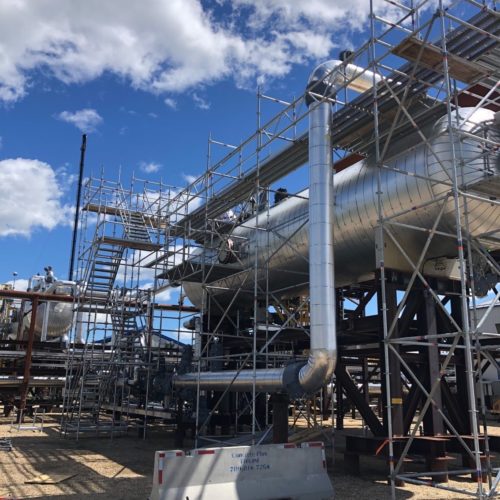
At G&R Insulating & Scaffolding, our team focuses on trained installation, quality control, and safe project execution. Our company was established in 2000 and serves the oil and gas industry throughout Western Canada.
Build Better Thermal Control Into Your Facility
Industrial vessel insulation works best when the insulation material, installation method, protective jacket, and operating conditions work together. Polyurethane panels can provide a close-fitting thermal layer around curved vessels, while metal jacketing helps protect that layer from weather and physical exposure.
This combination can support heat conservation, process control, equipment protection, and safer working conditions. Selecting the right system and installing it correctly can make a meaningful difference in long-term performance.
Plan Industrial Vessel Insulation With G&R Insulating & Scaffolding
Talk with G&R Insulating & Scaffolding about industrial vessel insulation designed around your vessel, operating conditions, and Western Canadian site requirements.