Winter does not give industrial facilities much warning. One overnight temperature drop can freeze an exposed pipeline, stall a process, and turn a routine workday into an emergency shutdown.
For facilities running continuous operations, that kind of disruption carries real costs. The glycol heat tracing system installation exists to prevent exactly that. When it is designed and installed correctly, it keeps pipe temperatures stable and fluid moving, regardless of what the weather is doing outside.
What Makes Glycol Tubing Installation Different from Electric Tracing?
Electric heat tracing uses resistance cables to generate heat. Glycol tubing installation works differently. It circulates heated fluid through small-bore tubing running alongside the process pipe, transferring heat continuously along the full pipe length.
For long runs, hazardous area classifications, or processes requiring tight thermal control, glycol systems tend to outperform electric alternatives. The heat distribution is more even, and the system is less vulnerable to insulation gaps or moisture intrusion.
Industrial Heat Tracing Systems: The Installation Process
The installation involves several coordinated stages. Each one affects how the finished system performs, especially under the harshest conditions.
Site Survey and System Design
Every project starts with a thorough site assessment. We map pipe runs, identify freeze-vulnerable sections, review process temperatures, and determine the correct glycol concentration and flow rates for the facility’s specific winter conditions.
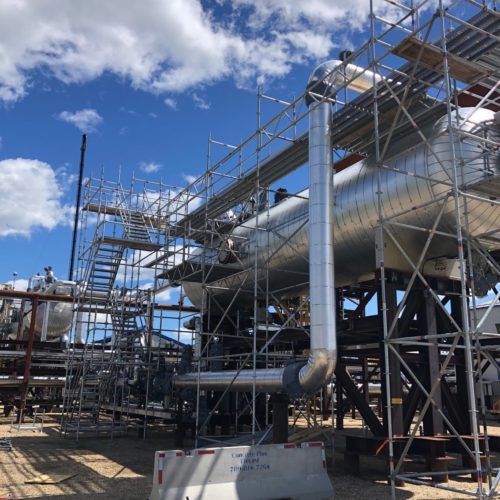
Glycol Tubing Installation Along Pipe Runs
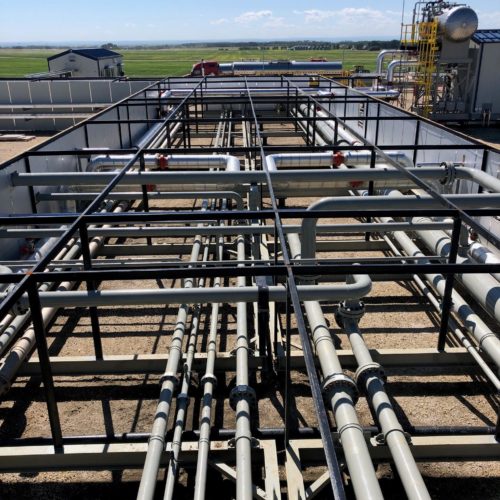
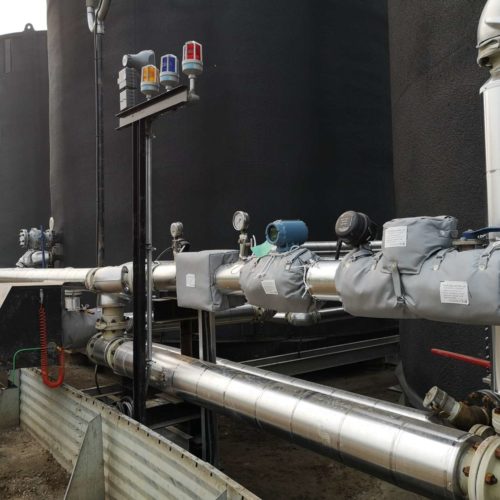
The tubing is routed and secured along the process pipe with consistent contact throughout. Proper spacing, attachment, and routing around valves, fittings, and flanges all matter. Gaps or loose sections reduce thermal efficiency and create weak points in the system.
Insulation and Jacketing
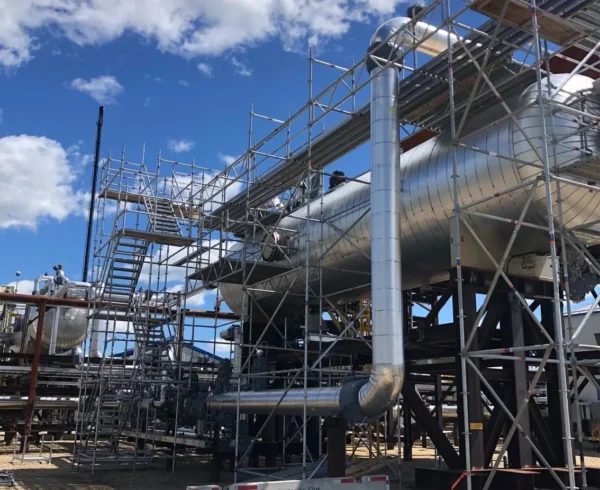
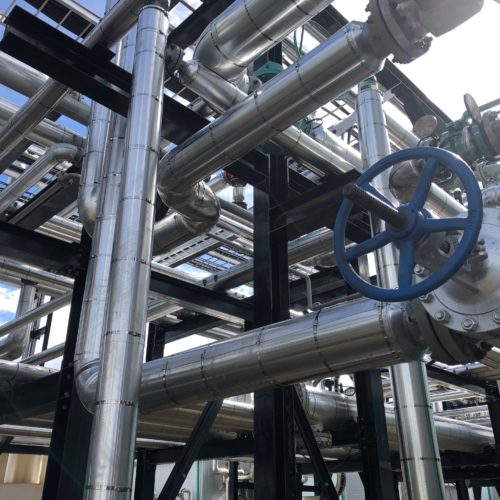
Once tubing is in place, the assembly is insulated and jacketed. At G&R Insulating and Scaffolding, we handle this scope in-house. The insulation quality directly affects how well the tracing system performs, so having both trades under one team keeps the standard consistent.
Manifold and Pump Station Setup
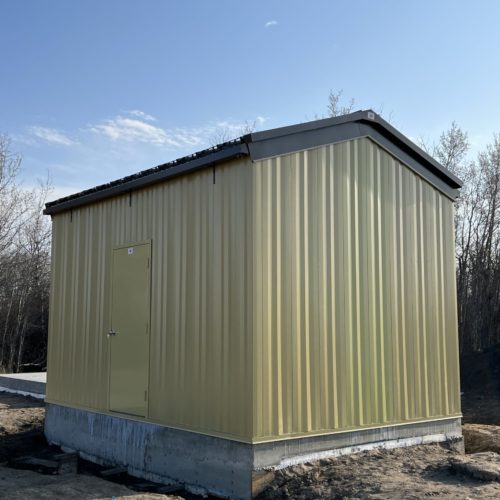
The glycol circuit connects to a central supply manifold and pump station. Flow balancing at this stage ensures every branch receives adequate circulation, which is critical for larger or more complex pipe networks.
Pressure Testing and Commissioning
Before handover, the system is pressure-tested, inspected for leaks, and verified against design flow rates. Commissioning is where we confirm the installation actually performs as intended, not just on paper.
Temperature Maintenance for Industrial Pipelines: Why Consistency Matters
A system that works most of the time still fails the facility when conditions are at their worst. Temperature maintenance for industrial pipelines is about holding stable heat output on the coldest nights, during extended cold snaps, and in sections of pipe that are hardest to protect.
When glycol concentration, insulation thickness, and flow rate are properly calibrated during installation, the system runs without constant manual intervention. Operators can monitor it. They should not have to manage it daily. That reliability is what makes a well-executed glycol heat tracing system installation worth the upfront investment.
Is Glycol Heat Tracing the Right Choice for Your Facility?
Not every application calls for glycol. It makes the most sense when:
- Pipe runs are long or routed through complex areas
- The facility operates in a hazardous area classification
- Tight, consistent temperature control is required across large sections
- A central glycol system already exists and can supply additional circuits
Signs Your Current Heat Tracing System Needs Attention
If your facility has experienced localized frost on pipe surfaces, unexpected pressure drops, or uneven fluid temperatures across a run, the heat tracing system may no longer be performing as designed. Older glycol tubing installations can develop flow restrictions, lose insulation integrity, or run at glycol concentrations that no longer match current winter conditions. These are not always dramatic failures. They tend to show up gradually, and by the time they are obvious, the damage is already done. A routine inspection can catch those issues early and determine whether the system needs recalibration, partial replacement, or a full glycol heat tracing system installation upgrade.
The Hidden Cost of a Poorly Installed Heat Tracing System
Poor installation creates problems that do not always show up immediately. Gaps in tubing contact, under-insulated sections, or incorrect glycol concentration can all cause localized freeze points, even when the rest of the system is running fine. By the time those failures show up, it is usually mid-winter, and the fix is urgent.
Our team at G&R Insulating and Scaffolding works on industrial systems where the margin for error is low. We approach every installation with that standard in mind.
Request a Site Assessment for Your Glycol Heat Tracing System Installation
Do not wait until the first cold snap to address pipeline freeze protection. Reach out to G&R Insulating and Scaffolding to schedule a site assessment and get your glycol heat tracing system installation planned well ahead of the season.